
Every Endodontist knows that referrals are the foundation of a thriving practice. But knowing that and actively building the kind of reputation that generates them consistently are two different things. The difference usually comes down to one thing: follow-through.
Referring general dentists are not asking for much. They send a patient, they want to know the patient was seen, the case went well, and there is a report waiting for them when they need it. That is the entire transaction. When Endodontists deliver on that consistently, they become the specialist the referring dentist talks about when a colleague asks for a recommendation. When they do not, they become the office that requires follow-up calls and guesswork.
This post is about what that follow-through looks like when the infrastructure supports it, and what it costs when it does not.
A referring GP is putting their name behind every patient they send to you. That is not a small thing. When they tell a patient, "You need to see an Endodontist. I want you to go to this practice," they are extending their credibility to you. The patient's experience at your office reflects on them.
What they need from you after that referral is simple: confirmation that the case was handled well, and access to the clinical record that documents it. Not a summary sent three days later. Not a phone call they have to chase down. Just a report, available when they need it, that shows them what happened and what the outcome was.
The practices that deliver that reliably build referral bases that grow. The ones that make referring dentists chase down information through phone tag, delayed emails, and expired document links quietly lose referrals to practices that make it easier.
The standard workflow for post-treatment referral communication at most Endodontic practices looks something like this: treatment is completed, a staff member generates a report, the report is emailed to the referring office, and then the practice moves on to the next patient.
That sounds functional, but it breaks down in practice.
Emails get buried. Referring dentists receive a high volume of correspondence from specialists, labs, insurance carriers, and patients. A treatment report that lands in an inbox on a Tuesday afternoon may not be reviewed until Thursday, by which time the context of the referral has faded. If the dentist misses it entirely, they have no way to retrieve it without calling your office.
Front desk staff bear the burden of follow-up. When a referring dentist calls to ask about a patient's case, someone on your team has to stop what they are doing, pull the chart, find the report, and relay the information. That call takes five to ten minutes. Multiply it by the number of active referring relationships your practice maintains, and it becomes a meaningful portion of someone's day.
Report links expire. Some practices send reports via document-sharing platforms that put a time limit on access. If a referring dentist needs to go back to a case six months later, for a patient who has returned with a concern or for their own records, the link no longer works. Now they are calling your office again.
These are not catastrophic failures. But they accumulate, and they affect how your practice is perceived.
DentalEMR's referral portal is built around one core idea: the referring dentist should be able to find what they need without waiting on your team to surface it.
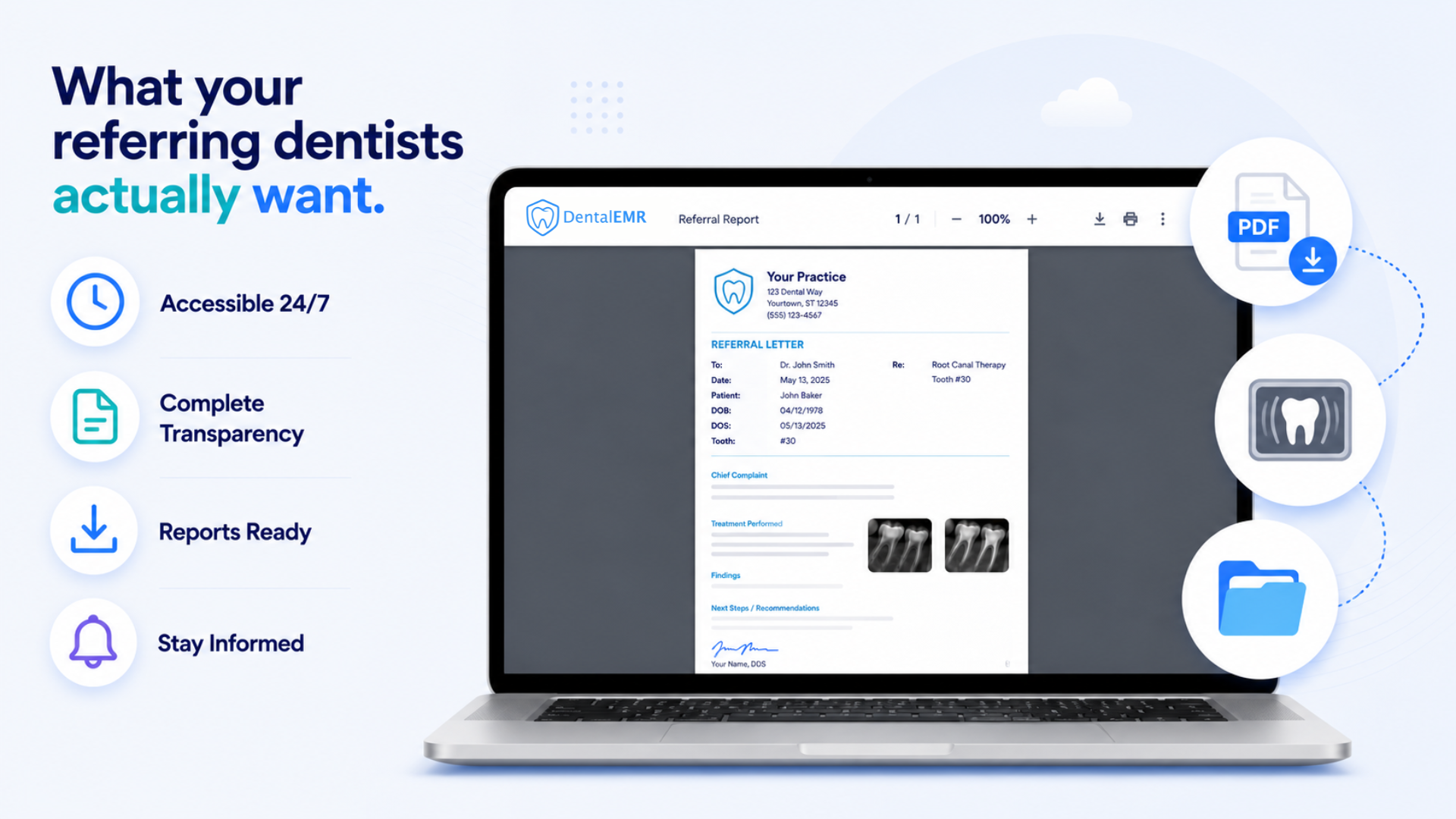
When a referring GP has access to the portal, they log in on their own timeline and see the cases they have sent to your practice. Completed treatment reports are available there directly. No need to wait for an email, no need to call the front desk, no need to ask anyone for anything. If they want to review a case at 7am before their first patient walks in, they can do that. If a patient calls with a follow-up question and the dentist needs to reference your notes, they open the portal and find the answer in under a minute.
The case history in the portal does not expire. There are no time-limited links. Every report associated with a referral lives in the portal as long as the relationship is active. If a referring dentist missed an update notification in their inbox, the report is still there when they go looking for it.
This matters more than it sounds. The implicit message your referring dentists receive when the portal works this way is: "We are organized. We respect your time. We are the kind of practice you can count on without having to manage us." That message builds trust in a way that an occasional timely email cannot replicate.
Endodontists do not usually ask their referring dentists, "What do you appreciate about working with my practice?" But if they did, the answers would cluster around a few themes: clear communication, reliable follow-through, and easy access to information. Clinical excellence is assumed. The differentiator is the administrative experience.
Practices that make referring dentists' lives easier get more referrals. Not because they are necessarily better clinically, but because the referring dentist trusts that the patient experience will be consistent and that they will not have to manage the relationship after the handoff.
A referral portal that gives GPs access to exactly what they need, when they need it, without requiring anyone at your practice to facilitate the transaction, is the most direct way to build that trust at scale. It turns a high-effort communication workflow into a self-serve one. And it makes you the Endodontist those referring dentists recommend to their colleagues without hesitation.
The transition to portal-based referral communication is typically straightforward for DentalEMR users. Referring offices receive a login, they access the portal through a web browser with no software installation required, and case reports appear automatically as treatments are completed.
For the Endodontic practice, the workflow does not change significantly. Treatment is documented in DentalEMR as it normally would be. The portal surfaces that documentation to the referring dentist without any additional steps.
What changes is the inbound: the number of "just checking on a patient" phone calls to the front desk decreases. Staff are not fielding update requests during peak hours. Referring dentists who used to call because they had no other option start using the portal instead. The relationship becomes lower-maintenance on both sides, which tends to make it more durable.
Referring dentists are not looking for a complicated relationship with the specialists they trust. They want reliability, transparency, and access to information when they need it. The practices that give them that consistently build referral bases that grow without constant effort. The ones that make referring dentists work for information quietly lose ground.
If your current system makes it harder than it should be for referring dentists to access case updates and treatment reports, that is worth fixing, not just as an operational improvement, but as a referral strategy.