
It takes more than teeth to run a dental clinic. It’s a matter of making sure that time, appointments, and traffic flow are all handled as effectively as possible. A lot of dentists find themselves having to deal with last-minute call-offs, double booking, and countless phone calls in order to stay organised with their schedule. Scheduling software fills the gap, rolling back the way dental practices are running. With the proper tools, dentists can save time, alleviate stress and prioritize patient care. In this blog post, we’ll explore how scheduling software is transforming dental practices for the good. We’ll explore the advantages of it and how you can choose the right solution for your clinic.
Scheduling software automates booking, reminders, and cancellations, freeing up staff for more important tasks. It helps reduce no-shows by sending automatic reminders to patients. Dentists can easily manage their calendars and avoid double bookings.
Patients enjoy the convenience of booking appointments online anytime. Overall, it leads to smoother operations and happier patients. It also gives real-time updates, so any changes are instantly visible to the whole team. Plus, detailed reporting features help track appointment trends and improve planning.
Dental scheduling software is a digital tool designed to help dental practices manage appointments, patient information, and staff schedules. Unlike traditional methods, this software automates many of the repetitive tasks associated with scheduling, such as sending reminders and confirming appointments.
In a dental clinic setting, scheduling software integrates perfectly with other systems, like Electronic Medical Records (EMR), to provide a complete view of each patient’s journey. It allows both staff and patients to book, reschedule, or cancel appointments quickly and easily.
These key advantages show how digital scheduling tools can improve productivity and patient care. From saving time to improving patient satisfaction, these tools offer practical solutions to common challenges.
Scheduling software takes care of bookings, reminders, and cancellations automatically. This frees up your front desk staff from repetitive tasks. It replaces the need for constant phone coordination.
Faster scheduling means you can see more patients in a day. As a result, your team can focus more on patient care and in-clinic responsibilities.
Automatic reminders are sent to patients before their appointments. This significantly lowers the chances of missed visits. You can set multiple reminders via email or SMS.
This consistency keeps your schedule running smoothly. It helps maintain a consistent daily schedule and reduces revenue loss.
Patients have the freedom to manage appointments online whenever it suits them. They don’t have to call during office hours, which makes things easier. The 24/7 access adds flexibility to their busy lives.
A user-friendly system leaves a lasting positive impression. A well-ordered experience builds trust and keeps patients coming back.
Staff are freed to be more productive as the manual process is reduced. Schedule errors are less common in digital than in paper logbooks. Team members are experiencing far less stress and are much better organized.
It makes a calmer and more focused work environment. Your agents can get more done and have more meaningful conversations.
Changes and reservations are all reflected in real-time throughout the system. This would prevent double booking or booking mistakes. I can keep everyone in the loop and on sync throughout the day.
It also minimizes confusion and miscommunication with other members of the team. It keeps everyone from the front desk to the dental chair on the same page.
When considering a dental scheduling system for your clinic, you should be considering features which are beneficial to staff workflow and patient experience. The proper tool can facilitate planning, minimize errors, and enable a better experience all around.
Choosing the best appointment management tool for your dental office is a major decision, and one that will add immediate value to your practice. Begin by looking at the price comparison and pricing plans, ensuring that everything is upfront and there aren’t any added fee’s and that the features suit your clinic.
Third is the level of difficulty to use. The interface of the software should be user-friendly enough for your employees and patients to use it without getting lost.
Also, consider the quality of customer support. Go for a provider that offers reliable help, training, and troubleshooting whenever needed.
Before finalizing your choice, take time to read reviews and recommendations from other dental professionals. Real-world feedback can highlight strengths and potential issues. Lastly, always take advantage of free trials or demos. This gives you hands-on experience and helps confirm that the software fits well with your clinic's workflow.
Making the switch to an appointment system becomes much easier when you have a clear strategy in place. Planning helps avoid confusion and supports a smoother adjustment for both staff and patients.
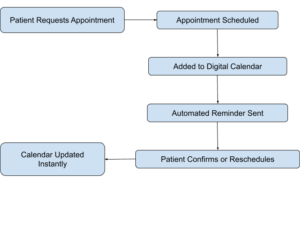
From booking to confirmation, here's how everything flows smoothly with automation.
Dental scheduling software is really revolutionizing the modern clinic. By streamlining processes, eliminating no-shows and giving staff and patients a better experience every time, the system allows dentists to do more of what they love: Give better-care. If you are considering enhancing your scheduling, as well as integrating it with your Dental EMR, feel free to reach out to us today to see how we make you practice run better and smarter.
Yes, such scheduling software can be used to schedule appointments for more than one location, with an individual overview of the calendar and reporting. It provides standardized scheduling policies, staff deployments and patient communication in all the branches.
Telehealth capabilities and integrated features have become a part of many practice management applications today which is used to conduct virtual consultations, appointment reminders and secure video links in the scheduling. It's a simplified way to provide remote patient care and decrease the administrative overhead for your staff.
You can monitor statistics such as patient retention rate, appointment trend, no-show count and staff productivity to optimize your clinic performance. And with this knowledge, you can make informed decisions and operate more efficiently.