
Your patient just had a root canal. They drove home, doing their best to follow post-op instructions. Depending on the complexity of their case, they may be experiencing some soreness. Either way, they're at home now, wondering what's normal and what to watch for.
Most practices never reach out. The next contact is a billing statement or an automated reminder for a future appointment. And so the patient forms their impression of your practice. Not from a gesture of care, but from silence.
The practices that do reach out change everything. Not with a long call. Not with a form or a survey. Just a brief, genuine check-in from someone on your team. It's a small action with an outsized impact on how your patients talk about you and who they tell.
Endodontic procedures come with a specific kind of patient anxiety. The procedure has a reputation. Patients go in braced for the worst and often leave pleasantly surprised, but the hours after the appointment are when uncertainty sets in.
Is the soreness normal? Should it feel like this? Is something wrong? What do I do if I start having post-op complications?
Most of those questions don't get answered because most practices don't create a moment for them to be asked. A post-op follow-up call does. It answers the questions patients didn't know they could ask, reassures them that their experience is normal, and signals something important: your practice cares about what happens after they leave.
That distinction is the entire difference between a patient who felt cared for and one who just felt like a completed procedure.
Here's what most endodontists underestimate about post-op follow-ups: they aren't just about patient satisfaction. They're about referral relationships.
When a general dentist refers a patient to your practice, they're putting their name on the experience. That patient is going to report back at their next cleaning, in passing at a follow-up appointment, or just in conversation. What they say shapes how that dentist thinks about referring to you in the future.
A patient who received a follow-up call tells a different story than one who didn't. They describe a practice that was thorough, attentive, and professional. They use words like "they actually called to check on me." And that kind of patient experience is one of the most powerful referral drivers an endodontic practice can build. It costs almost nothing and it's memorable.
The reason most practices don't follow up consistently isn't a lack of intention. It's a lack of a system. When your team is busy, post-op calls are easy to skip. There's no visible consequence until a referral relationship starts to quietly cool.
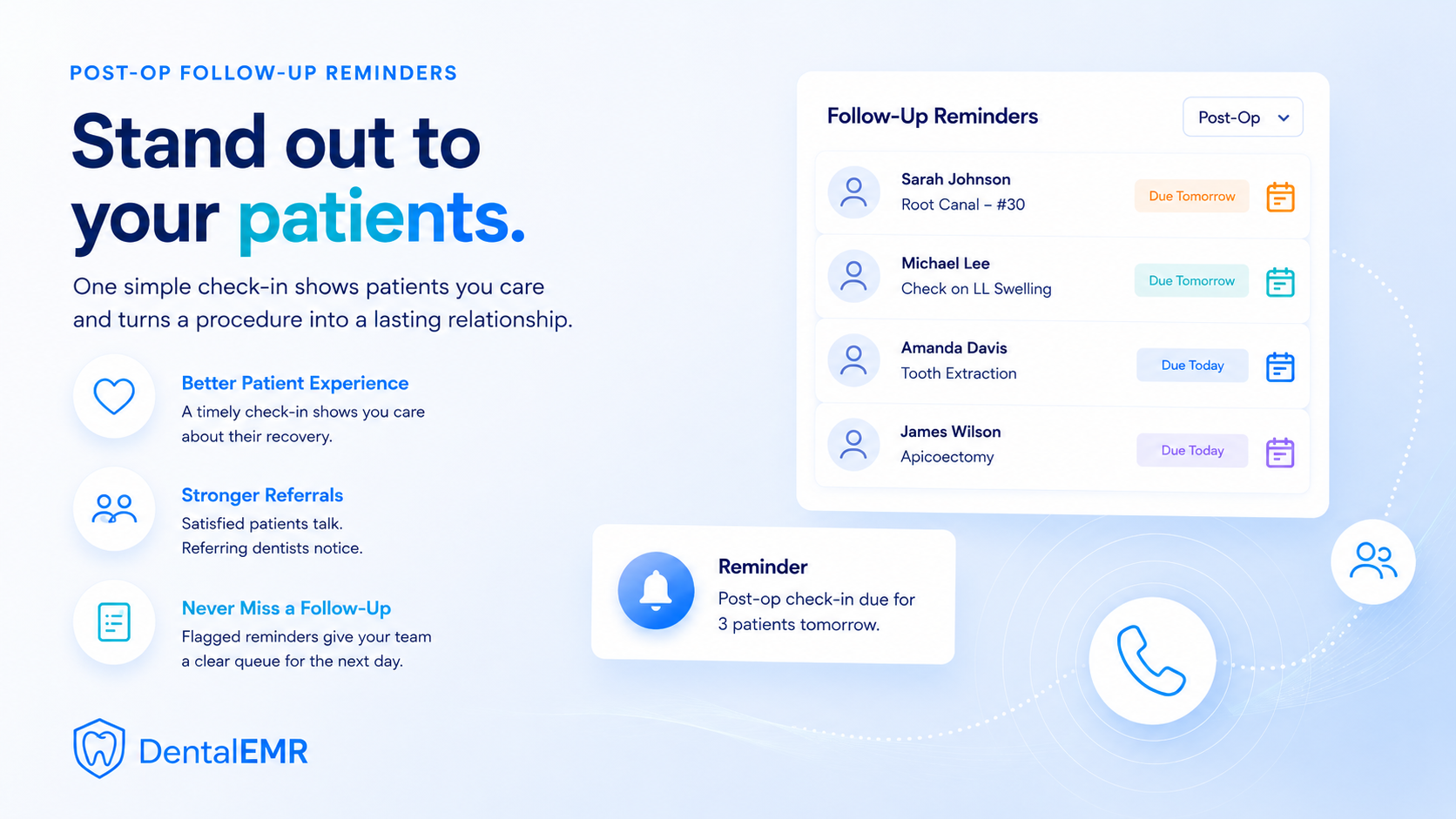
DentalEMR's native follow-up reminders tab removes the guesswork.
For practices that want this fully automated, the Weave integration takes it further, triggering personalized outreach by appointment type without your staff having to initiate anything manually.
This doesn't need to be a long call. In fact, shorter is often better. The goal isn't to conduct a clinical assessment. It's to make a human connection.
A good post-op follow-up:
That's it. No script required. Just consistency and a system that makes sure it actually happens.
The next business day is the standard best practice. This timing catches patients when the procedure is still fresh, soreness is most likely present, and the call feels genuinely timely rather than like an afterthought.
Without a dedicated system, follow-up calls rely on individual staff memory, which means they happen inconsistently. Practice management software with a built-in reminders tab or patient communication integration (like Weave) creates a repeatable process that doesn't depend on any one person remembering to do it.
Yes, consistently. Referring dentists hear patient feedback directly. Patients who receive follow-up calls report significantly higher satisfaction with their endodontic experience, and satisfied patients are far more likely to mention that experience to their dentist. Over time, this shapes how often and how confidently a referring dentist recommends your practice.
They should contact your practice right away. This is another reason the follow-up call matters: it opens the door for patients to share concerns early, before a minor issue becomes a larger one. A practice that already reached out is one patients feel comfortable calling back.
DentalEMR's native reminders tab prompts your team to make a personal phone call, not send a text or email. That human touch is what makes it memorable. The Weave integration adds the option for automated outreach for practices that want to supplement personal calls with additional touchpoints.
Post-op follow-ups aren't a nice-to-have. For practices that want to build lasting referral relationships and a reputation for genuine patient care, they're a core part of how you operate.
DentalEMR's follow-up reminders tab makes it easy to build this into your daily workflow, so no patient slips through after a complex case, and no referral relationship is quietly weakened by a missed touchpoint.