
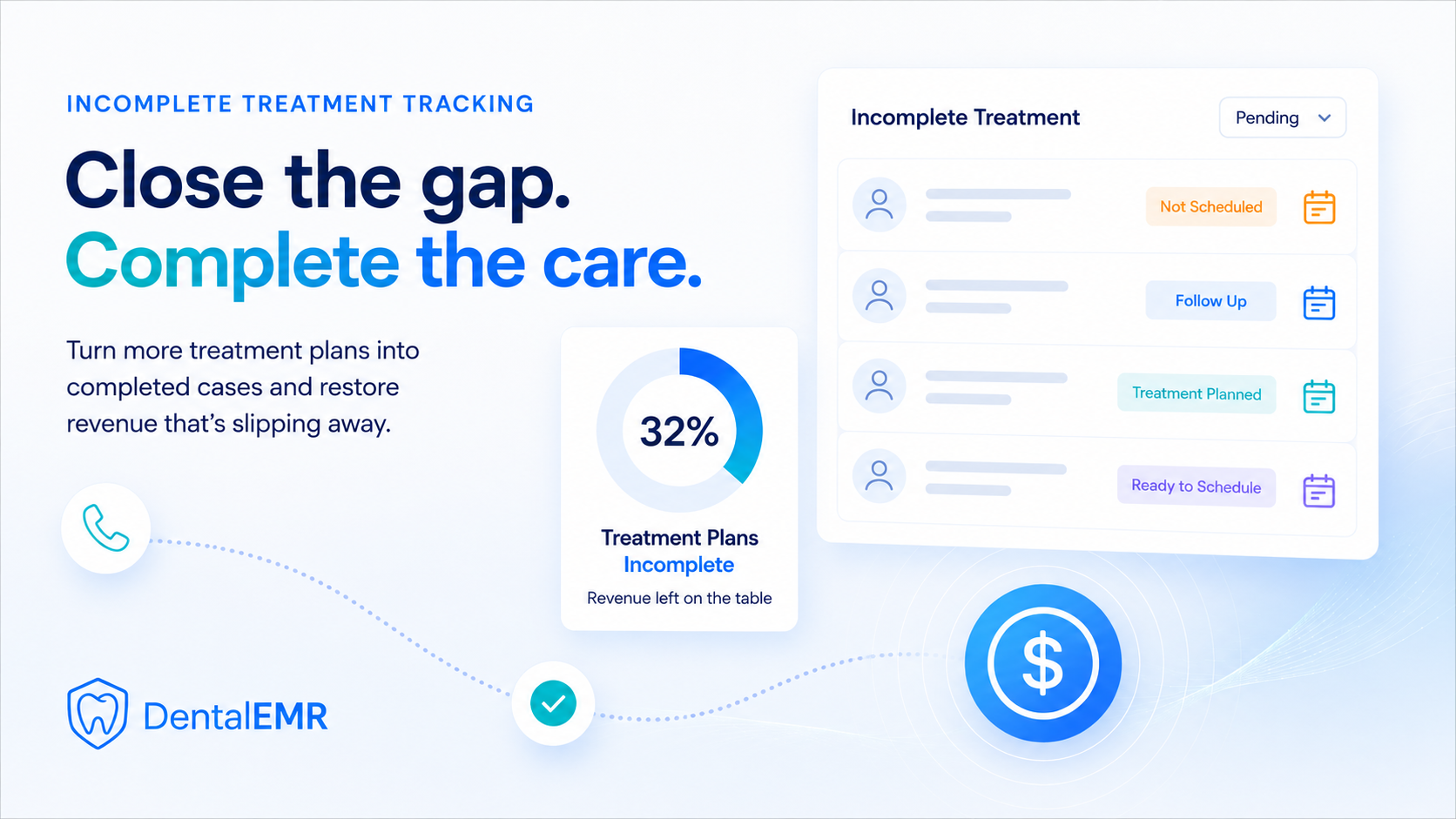
Most endodontic practices have a tracking problem. Not a data problem. A visibility problem.
You know how many new patients came in this month. You probably know your production numbers. But do you know how many patients sat down for a consultation, walked out with a treatment plan, and never came back to complete it? For most practices, that number is a blind spot. And inside that blind spot is a significant amount of lost revenue, and patients who never got the care they needed.
When a patient comes in for a root canal consultation, two things happen. They leave with a treatment plan. And they leave with a choice. Some schedule immediately. Some say they'll call back. And some just disappear.
No one flags them. No one follows up. They become another name on a list that no one is actively watching.
The gap between your consultation volume and your treatment completion rate is one of the most telling metrics in an endodontic practice, and one of the least tracked. That gap represents real patients who needed care and didn't get it, and real revenue that never made it into your schedule.
The assumption is that if a patient doesn't come back, they made their choice. But that's rarely the full story. Life gets busy. The discomfort fades. The patient assumes it's not urgent. A single follow-up call from your front desk, made at the right time, changes that outcome more often than most practices expect.
The issue is that without a system to identify who hasn't scheduled back, those calls never happen. Your team is focused on patients who are already on the schedule. The ones who fell off never make it onto anyone's radar.
This is exactly the kind of gap that's easy to fix once you can see it.
DentalEMR's incomplete treatment tracking gives your team the visibility to act on this, without adding complexity to anyone's workflow.
The result is a simple, repeatable process. Your team starts the day with a clear list of patients to reach out to. One conversation is often all it takes to move a pending plan into a confirmed appointment.
Incomplete treatment tracking isn't just a revenue recovery tool. It's a patient care mechanism.
A patient who leaves with an untreated tooth doesn't stop having a problem. They delay care, often until it becomes more complicated and more painful. When your practice has a system to identify and follow up with those patients, you're doing something most practices don't: actively working to close the loop on their care.
And that matters to referring dentists. When a general dentist sends a patient to your practice, they're trusting you to see the case through. A patient who completed treatment tells a different story to their dentist than one who fell through the cracks. Your completion rate is a signal of your practice's reliability, and it shapes the referral relationships that drive your growth.
Your incomplete treatment rate is the percentage of patients who receive a treatment plan but don't complete the recommended procedure. A high rate indicates patients are falling through after consultations, which represents both lost revenue and missed care opportunities.
Effective tracking requires a practice management system that can filter patients by treatment status and flag those with open plans who haven't scheduled a follow-up appointment. Manual tracking through spreadsheets or notes is unreliable at scale.
Yes. Studies in dental practice management consistently show that a personal outreach call, even a brief one, significantly increases the rate at which patients schedule to complete treatment. The key is having an accurate, current list to work from.
Referring dentists send patients with the expectation that they'll receive complete care. When patients don't follow through, it reflects on the referral relationship. Practices that actively close the loop on incomplete treatment demonstrate reliability, which strengthens those relationships over time.
DentalEMR's incomplete treatment tracking is built specifically for endodontic practices. No workarounds, no manual list-building. Just a clear view of who needs follow-up and a simple process for your team to act on it.