
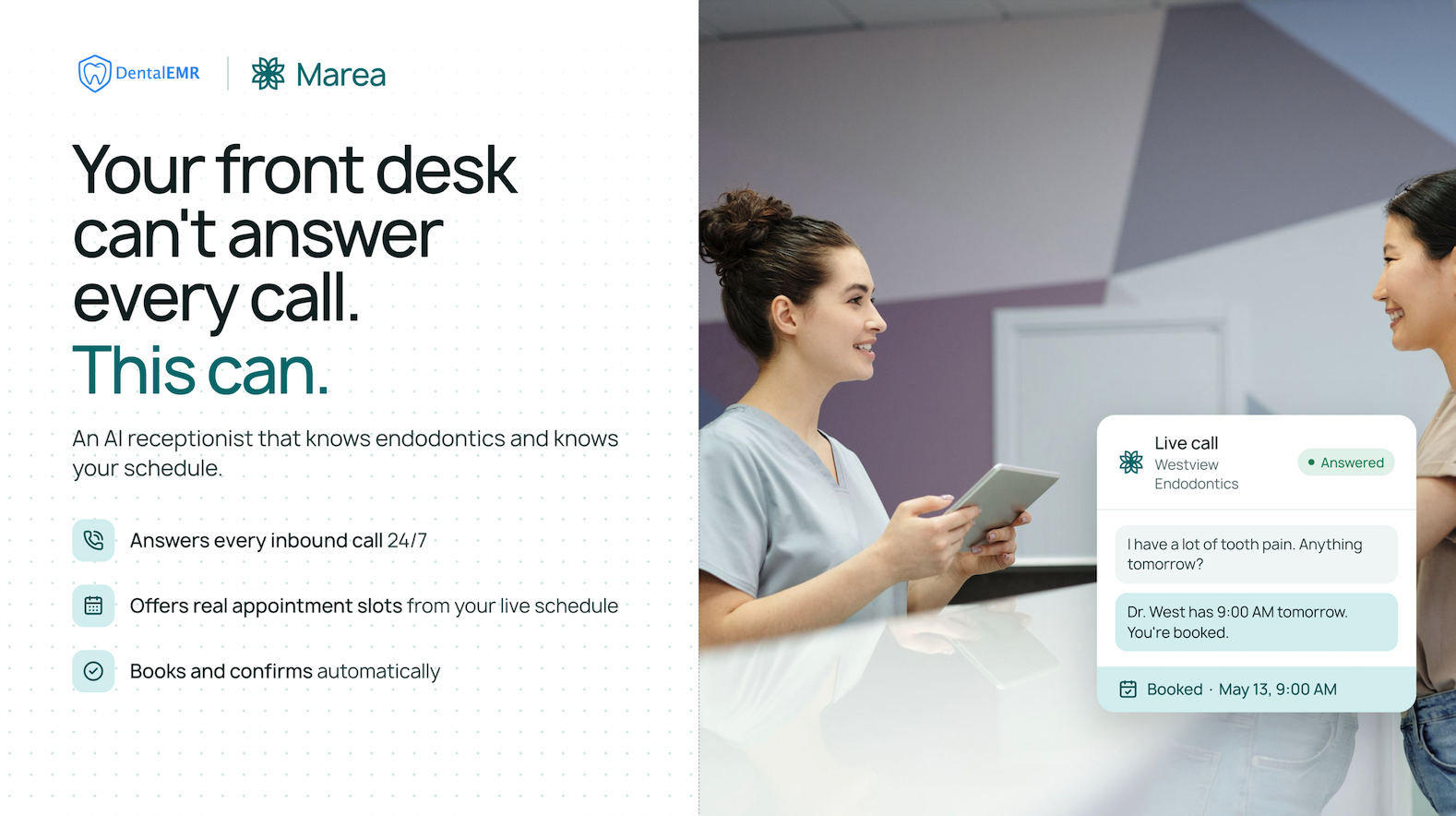
A lot of Endodontists hear about AI receptionist coverage and file it under "someday." The thinking usually goes: once the practice is bigger, once call volume justifies it, once there's real ROI on the table, then it makes sense to add something like this.
That logic feels reasonable. It's also backwards.
Every front desk, no matter how good, has moments it can't be on the phone. Someone's checking out a patient. Someone's helping a walk-in. Someone's in the bathroom. It's after hours, or the office is closed, or it's a holiday, or it's the weekend, or your team member called in sick.
None of that changes based on how big your practice is. A solo-doctor startup with a lean front desk hits this constantly, because there's no backup when the one person answering phones is busy. A fully staffed, high-volume practice hits it too, just from a different direction: more staff, but also more call volume and more simultaneous demands on that staff. The gap is structural. It exists at every size.
Which means the real question isn't "am I big enough to need this yet." It's "how much am I already losing while I wait to find out."
An AI receptionist isn't a substitute for the people at your front desk. Patients calling an Endodontic practice, often in pain, need a human touch, and your team provides that. What an AI receptionist does is catch what your team physically cannot: the calls that come in while every phone-capable human is already doing something else.
It's a backup, not a replacement. And it's a backup that costs a fraction of what it costs to hire, train, and manage another team member, with none of the scheduling complexity.
You don't have to guess at this. Your existing VoIP system is already tracking missed call volume. Pull that report. That number is not a hypothetical - it's calls that came in and went unanswered.
Now put a number on what each of those calls could have been worth. A single root canal typically runs $1,200 to $1,5001 in revenue. If even two out of every three calls that connect convert into treatment, one missed call recovered is worth more than double the monthly cost of AI receptionist coverage. That's not a projected return years from now. That's the math on a single phone call, this month.
Here's the part that's easy to miss: choosing to wait until you're "bigger" isn't a neutral decision. It's possible your practice isn't growing as fast as it could specifically because these calls are being missed. Every unanswered call is a patient who may have called the next practice on their list instead, or a referring office that got voicemail and formed an impression about how accessible you are.
Waiting for growth to justify the investment assumes the missed calls aren't part of what's holding growth back in the first place.
Not "will I need this when I'm bigger." Ask instead: how many calls went unanswered last month, and what would it have meant if even a few of them had been caught. Run the numbers from your own VoIP report. The case for coverage isn't about your practice's size. It's about what's happening on your phone lines right now.
No. Patients calling an Endodontic practice need a human touch, and your team provides that. AI receptionist coverage is a backup for the moments your team physically can't be on the phone, not a stand-in for the people who are.
It's actually the opposite. Smaller practices tend to have thinner front desk coverage, which means more of those calls go unanswered, not fewer. The gap this fills exists at every size. Waiting for growth to justify it assumes the missed calls aren't part of what's slowing that growth down.
Your VoIP system is already tracking missed call volume. Pull that report and you have a real number, not a guess, for how many calls went unanswered last month.
Flip the question around: what's it costing you not to have it? Every missed call is a patient who may have called elsewhere, or a referring office that got voicemail and drew its own conclusions about your practice. Compared to what a missed root canal case is worth, or what it costs to hire and manage another team member, the real expense is the coverage gap, not the tool that closes it.